![Highland_logo_1millionmiles_Brandmark_White-1.png]](https://24210048.hs-sites.com/hs-fs/hubfs/Highland_logo_1millionmiles_Brandmark_White-1.png?width=40&height=40&name=Highland_logo_1millionmiles_Brandmark_White-1.png)
Towing
- Always install wheel chocks when manually releasing the parking brakes, or the vehicle can roll
- For towing, make sure the vehicle is securely connected to tow vehicle and tow vehicle parking brakes are applied before releasing the disabled vehicle’s parking brakes
- To ensure release of parking brake, always cage the spring in the brake chamber
- Under no circumstances should the spring brake chamber be disassembled for the purpose of releasing the parking brake
Important factors to keep in mind when using tow hooks:
- Use both tow hooks when retrieving vehicle
- Use a slow steady pull, do not jerk on hooks
- Tow hooks are not designed for towing, but for retrieval only
Towing Preparation: Air Parking Brakes
- The spring actuated type parking brake can be released by recharging the air system with at least 64 psi (441 kPa) of air. If the brake system does not retain air pressure, then manually cage the spring brakes
Tow the Vehicle With Front Wheels Suspended
Whenever necessary, always tow the vehicle with the front wheels suspended. This method requires extra precautions that must be taken to avoid vehicle / component damage:
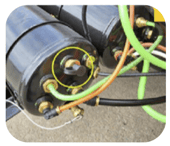
- Ensure the air system is filled and can hold air pressure. Air system can be filled through fitting found on the air tank
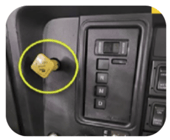
- Verify the parking brake is applied before working under the vehicle
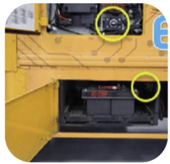
- Confirm the Low Voltage and High Voltage switches are in the “OFF” position

- Use a paint marker to record drive shaft mating positions at the drive motor and rear axle
- Remove the drive shaft
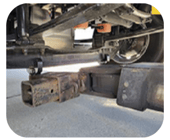
- Ensure vehicle is secure and ready to be transported
Once the vehicle is towed to the destination, install the drive shaft / propeller shaft between the rear axle and drive motor yokes using the previously removed fasteners and recorded propeller shaft mating positions. Tighten the fasteners to 115 lb-ft (156 N•m)
For additional details on IC buses, please refer to the IC Bus Operations and Maintenance Manual